


Printify
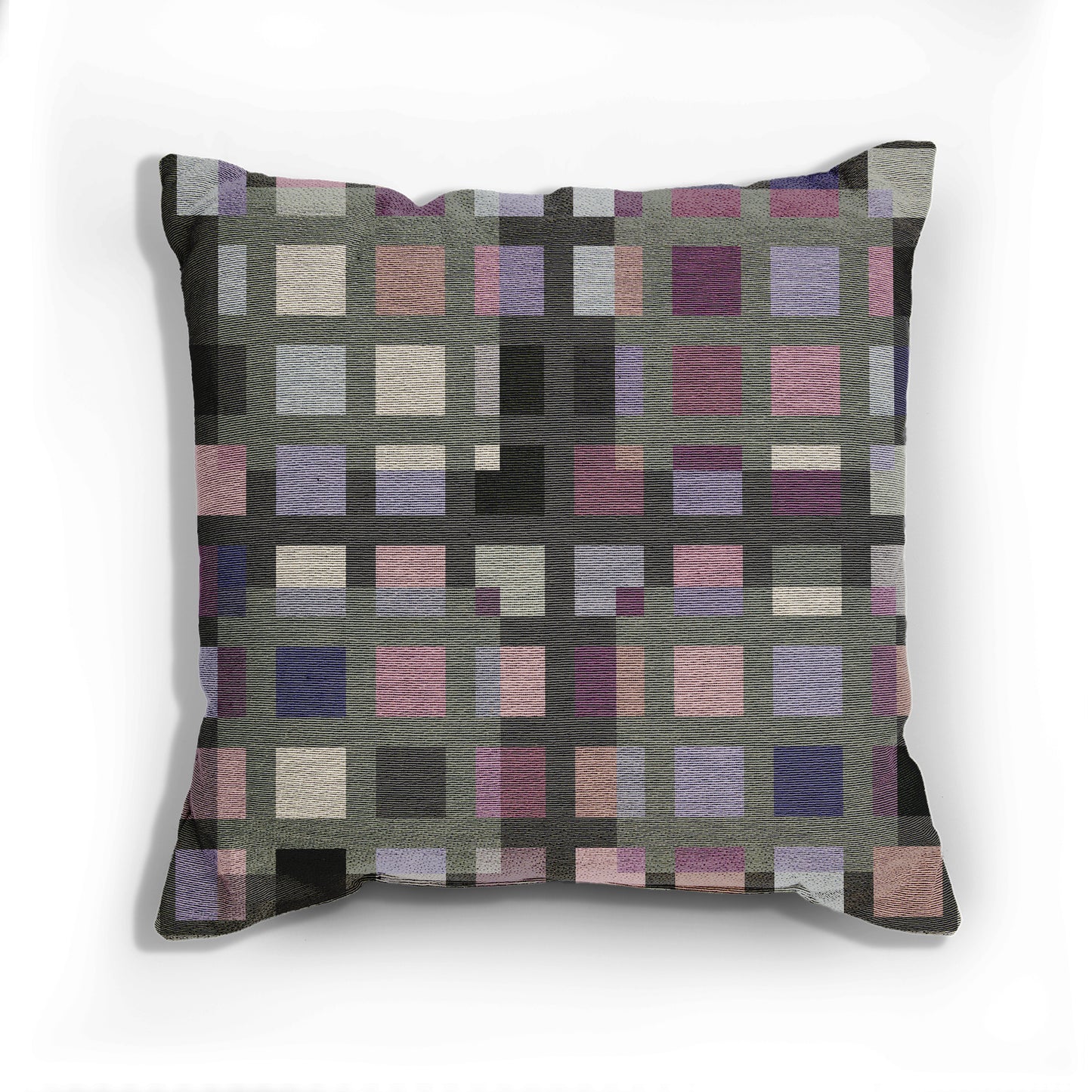
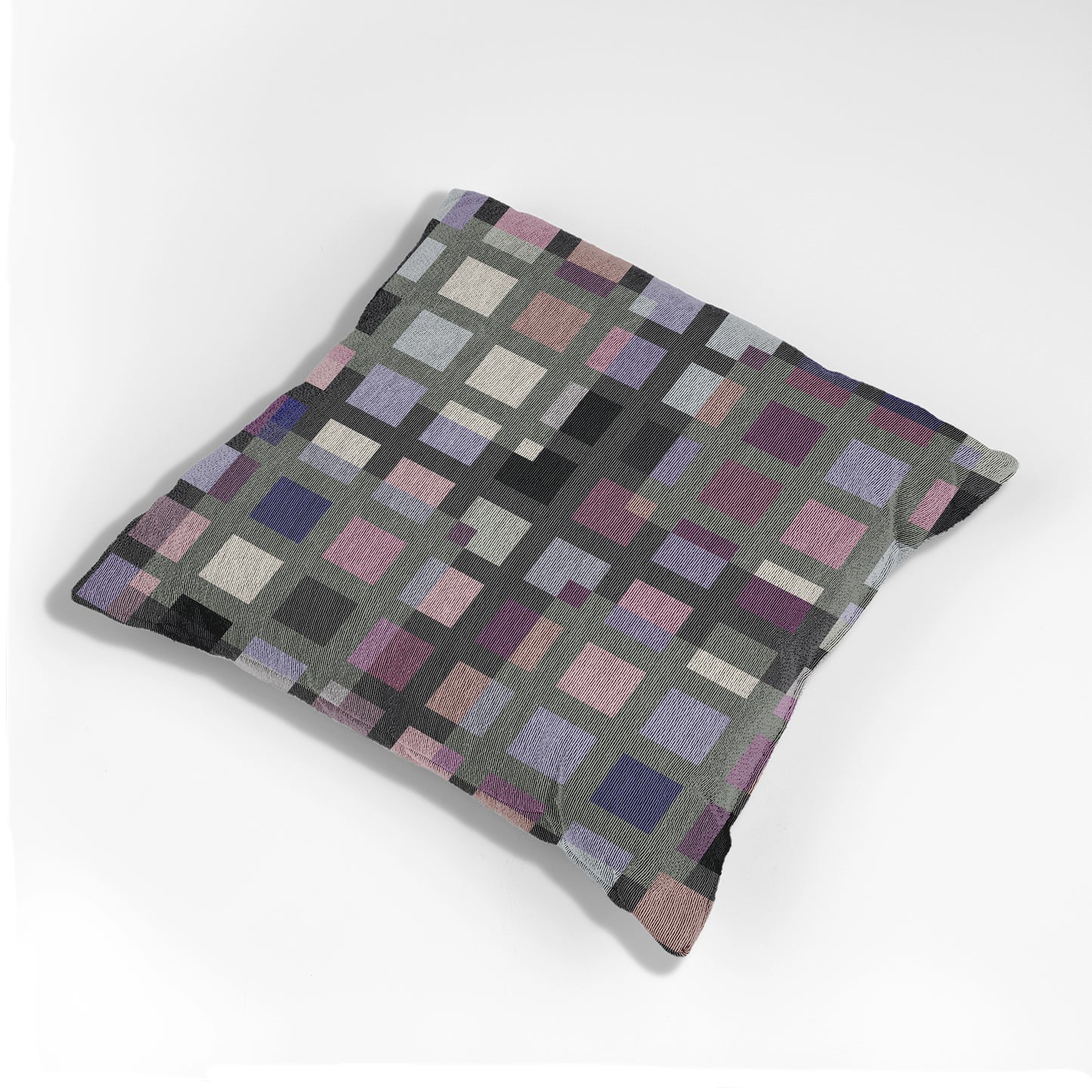
Tapestry pillow "SQUARZE" col. Ocean Alchemy. Jhane Barnes custom design
Tapestry pillow "SQUARZE" col. Ocean Alchemy. Jhane Barnes custom design
Couldn't load pickup availability
Jhane's Take on the Tapestry Pillows
These pillows are made at the same North Carolina mill as the tapestry throws, but they’re a very different object.
The weaving is tight, which is what tapestry weaving is meant to do. At this scale, it allows the design to be as crisp as a tapestry can be, and the structure holds up extremely well. The weft is a fine polyester, which makes it possible to weave tightly, preserve detail, and still be rugged. This is standard construction for most tapestry upholstery fabrics made in the U.S.
The fiber content is 58% cotton and 42% polyester, and it’s a combination chosen for performance, not sentiment. The poly fill is blown in and then sewn closed, creating a pillow that feels substantial and keeps its shape.
These are pillows that will last a very long time — even in a house with dogs (and I have three), unless someone decides the corners are chew toys.
At 17” × 18”, they’re intentionally a small accent size. They’re meant to layer, not dominate.
What I find most interesting about these, though, is the weaving logic itself.
Tapestry weaving always starts with a limited yarn system: typically a 4–6 color warp (red, blue, green, gold, black, white) and a 3-color weft. Those same yarn colors are what create all the colorways you see on my site. Nothing is dyed per design. Everything comes from how those yarns are combined.
There are literally hundreds of weave structures that can be used to achieve different color effects. This mill has specialized software that interprets my patterns and translates them into weave instructions. I work with a palette of 198 colors, and a single pattern might use 28 of them — which the mill’s software then converts into 28 different weave structures.
That still amazes me.
Because these are woven, not printed, designing them was especially satisfying. I had to think structurally again — not just visually — and it let me exercise a seldom-used muscle that originally drew me to textiles in the first place.
These pillows feel grounded to me. They’re durable, technically complex, and deeply connected to the history of how cloth is actually made. And for that reason, they’re one of the pieces I’m most proud of.
Products that share design and -or- color
-
Tapestry pillow "SQUARZE" col. Ocean Alchemy. Jhane Barnes custom design
Regular price $61.98 USDRegular priceUnit price per -
Tapestry Tote Bag "SQUARZE" col. Ocean Alchemy
Regular price $58.99 USDRegular priceUnit price per -
Tapestry Throw "SQUARZE" col. Ocean Alchemy (multiple sizes) JHANE BARNES Custom
Regular price From $62.98 USDRegular priceUnit price per


